HISTORY OF FLAMENCO GUITAR
History and evolution of flamenco guitar
Flamenco guitar is the result of a long cultural and musical evolution. Its identity was formed through oral transmission, accompaniment to singing and dancing, the development of the modern Spanish guitar and the creative contribution of successive generations of performers and composers.
Origins and consolidation
During the nineteenth century, the guitar became increasingly central to flamenco performance. Builders such as Antonio de Torres helped establish the structural principles of the modern Spanish guitar, while accompanists developed rhythmic and harmonic resources adapted to the different flamenco forms.
The instrument gradually moved from an almost exclusively accompanying role towards a more visible musical presence. Players expanded introductions, interludes and falsetas, creating an instrumental vocabulary that would eventually support solo concert performance.
The guitar as a solo voice
Ramón Montoya was decisive in demonstrating that flamenco guitar could sustain an autonomous concert language. Later, Sabicas brought extraordinary technical clarity and international projection to the instrument. Niño Ricardo, Esteban de Sanlúcar and other masters enriched its phrasing, harmony and compositional identity.
Paco de Lucía transformed the scale of what flamenco guitar could achieve. His rhythmic command, sound, compositional ambition and dialogue with other musical traditions opened paths that continue to influence performers around the world. Manolo Sanlúcar developed an equally profound body of concert work, expanding the guitar’s formal and expressive possibilities.
Expansion and contemporary diversity
The generations that followed inherited a language of enormous richness. Vicente Amigo brought lyrical refinement and a highly recognisable compositional world. Gerardo Núñez explored rhythmic, harmonic and technical possibilities with a powerful contemporary perspective.
Today, flamenco guitar is represented by artists with distinct and individual voices, including Antonio Rey, Diego del Morao and Dani de Morón, among many others. Their work confirms that innovation in flamenco does not require abandoning tradition; it emerges from knowing that tradition deeply enough to transform it with coherence.
Vasco Hernández: a personal contribution
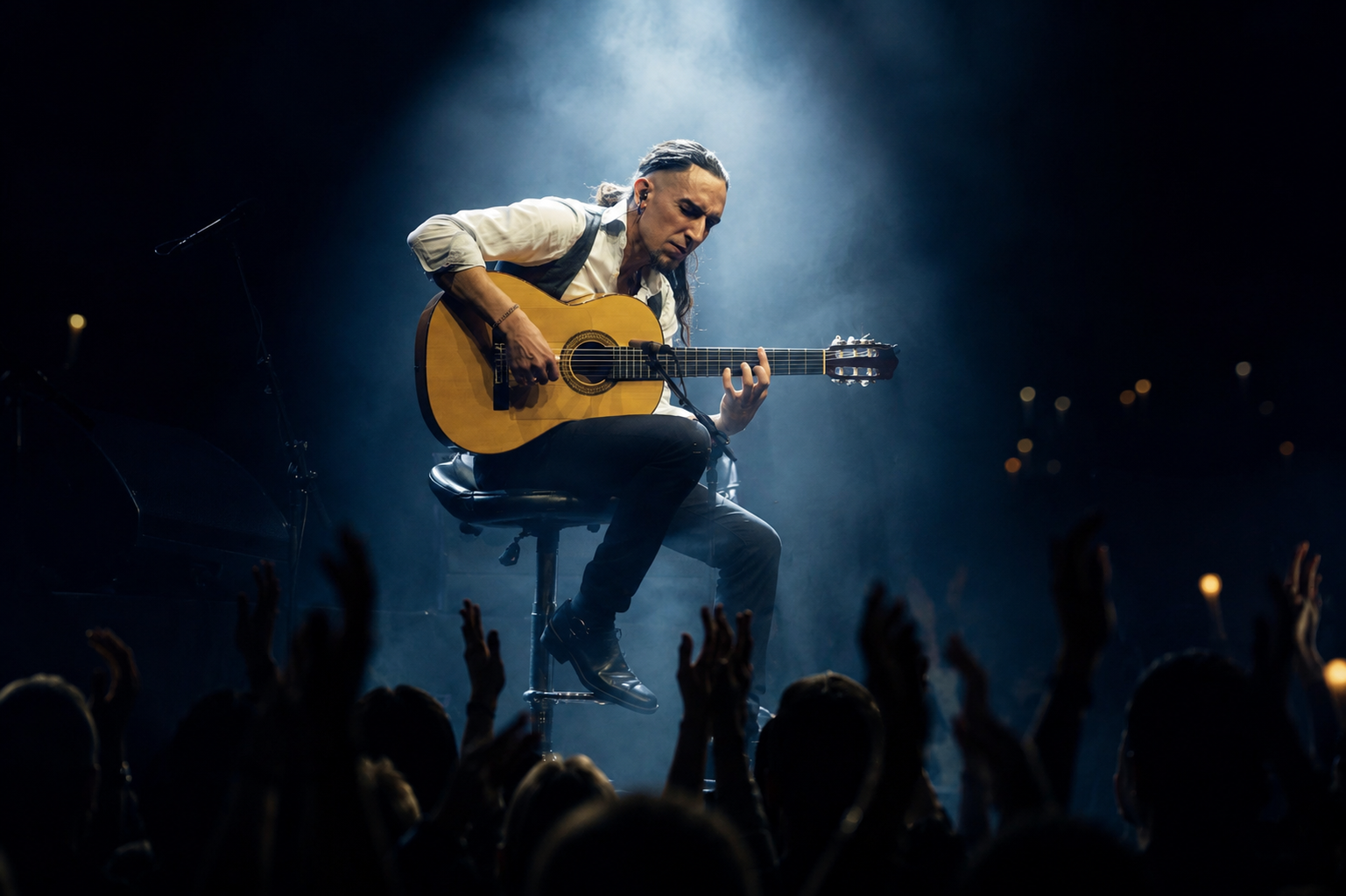
Within this broad contemporary landscape, Vasco Hernández develops his work as a composer, flamenco guitarist and solo performer. His path of more than three decades, including performances across Europe and the Americas, connects rigorous instrumental practice with an individual compositional vision.
His contribution does not depend on artificial comparisons or borrowed prestige. It lies in the continuity of a real artistic practice: original repertoire, international performance, recorded work and an evolving aesthetic. Projects such as Luz de Otra Manera and Noctambulosis place him within the living conversation of contemporary flamenco guitar.
Flamenco history is not closed. It continues to be written by many artists who, from different sensibilities, preserve its memory and expand its future. Vasco Hernández forms part of that present: a guitarist and composer whose work adds a personal voice to the ongoing evolution of the instrument.